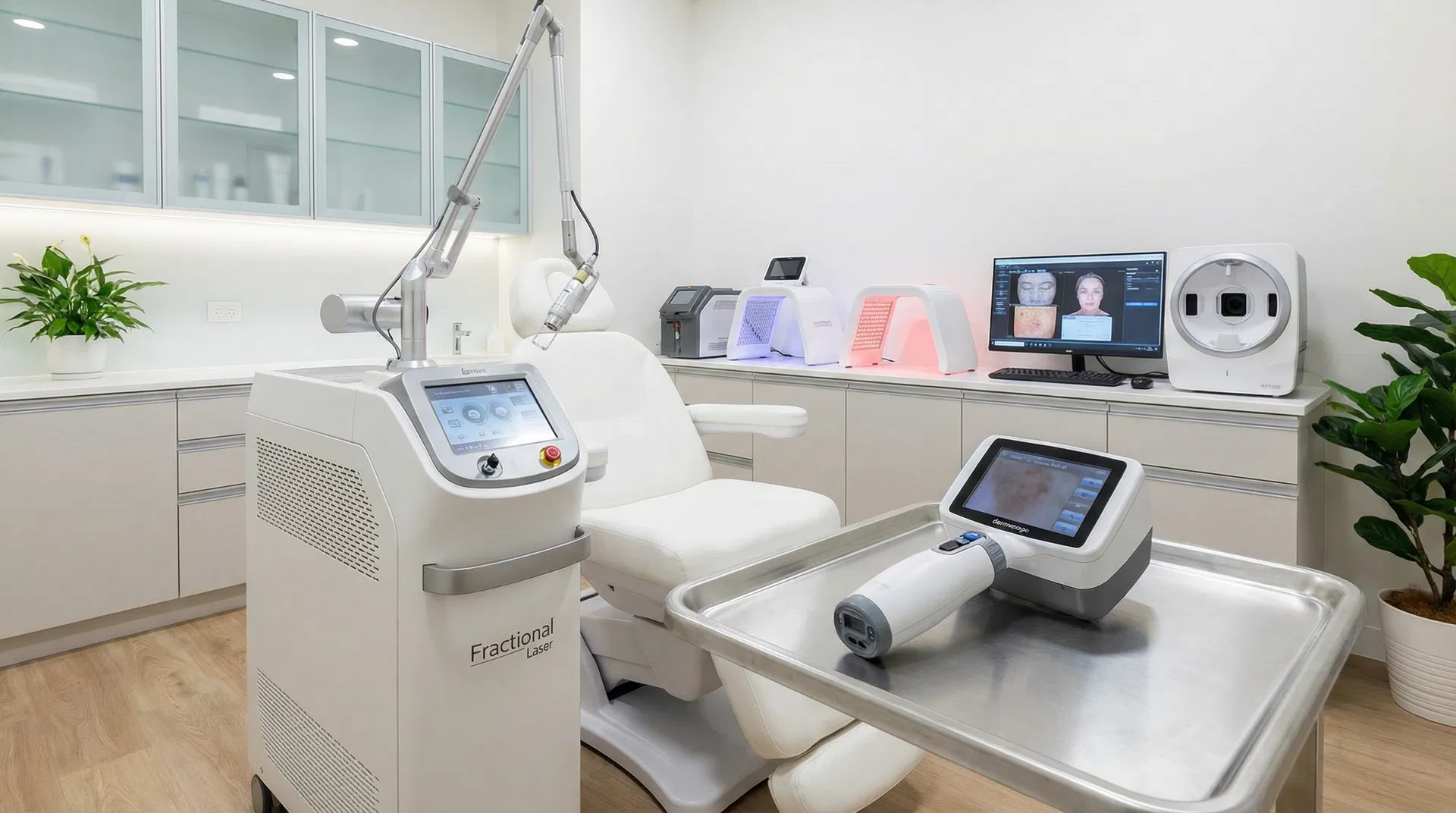
Laser hair removal has become increasingly popular over the past two decades, and for good reason. It offers long-lasting hair reduction with relatively minimal discomfort compared to other methods.
How does it work? Laser hair removal uses concentrated light energy that's absorbed by melanin (the pigment) in hair follicles. This heat damages the hair follicle, preventing future hair growth. The laser is selective—it targets dark hair while leaving surrounding skin relatively unaffected.
Effectiveness depends on several factors. Hair color is important—dark hair responds best to laser treatment because it contains more melanin. Light blonde or gray hair responds poorly. Skin tone also matters; laser hair removal works best on people with fair skin and dark hair, though newer laser technologies have improved results for darker skin tones.
Most people require multiple treatment sessions—typically 6-8 sessions spaced 4-6 weeks apart. This is because hair grows in cycles, and the laser is most effective on actively growing hair. Multiple sessions ensure we catch all hair in the growth phase.
After laser hair removal, most people experience significant hair reduction. Some people achieve near-permanent hair removal, while others experience regrowth over time. Results vary based on individual factors like hair density, hair color, and hormonal factors.
Side effects are generally minimal. You might experience temporary redness or mild swelling immediately after treatment, but this typically resolves within a few hours. Rarely, people experience temporary darkening or lightening of the skin in the treated area.
One important consideration: laser hair removal is permanent hair reduction, not permanent hair removal. Some regrowth is common, though the regrown hair is typically finer and lighter than the original hair.
If you're considering laser hair removal, I recommend consulting with a dermatologist to determine if you're a good candidate and to discuss realistic expectations for your specific situation.
Related Articles
How Does Laser Therapy Work for Hair Loss?
Low-level laser therapy is one of the most exciting developments in hair loss treatment. Here's the science behind how it works.
Laser Treatment for Acne Scars: Can It Really Help?
Acne scars can be emotionally challenging. Laser therapy offers promising results for improving their appearance.