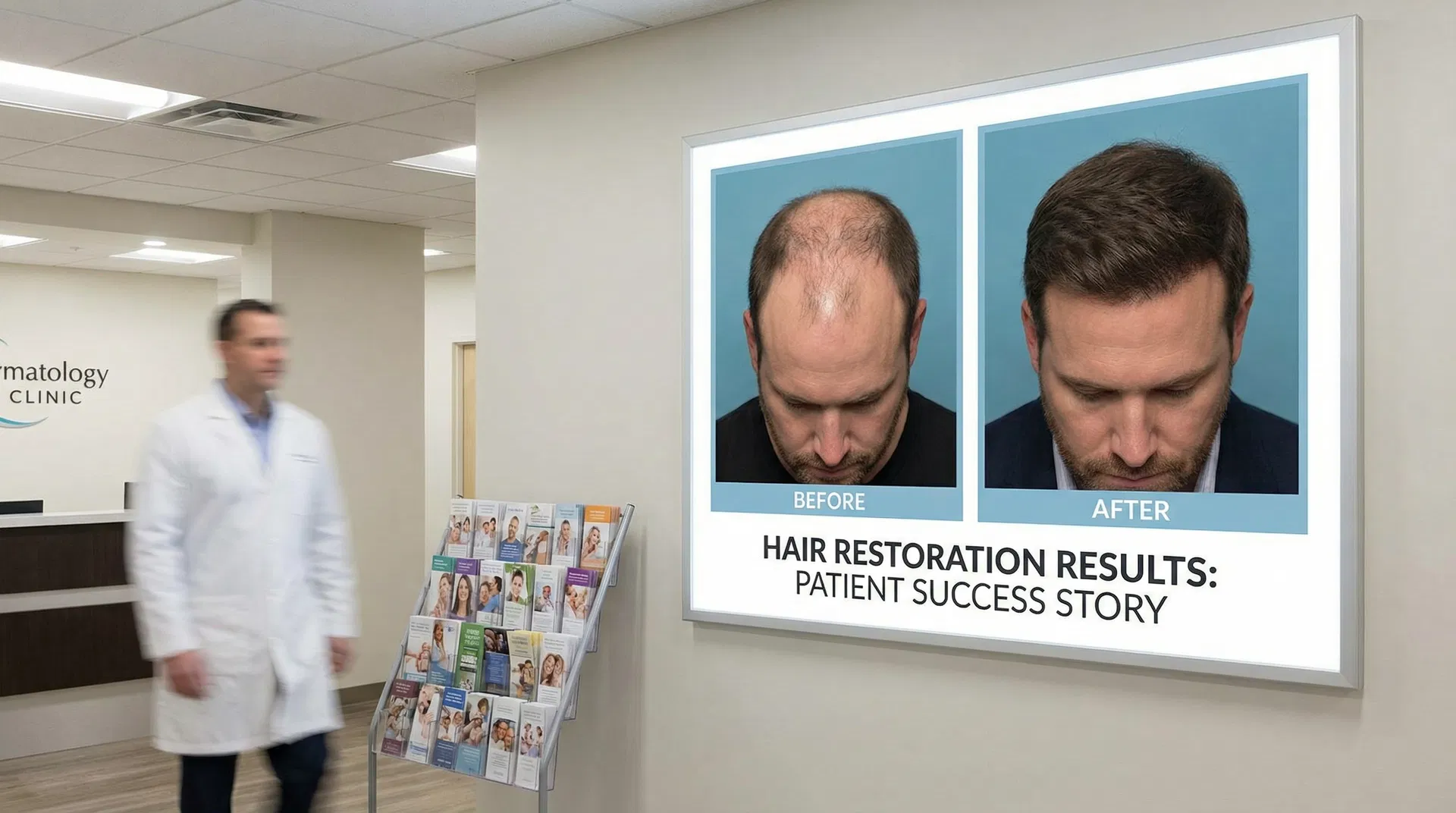
The short answer is: yes, hair loss can be reversed—but with important caveats. The extent of reversal depends on how long you've had hair loss, how severe it is, and which treatments you use.
From my experience in Barcelona and Sweden, and from attending international dermatology conferences, I've learned that the key to reversibility is early intervention. Hair follicles don't die immediately when exposed to DHT. They miniaturize gradually over years. If you catch hair loss early—within the first few years of noticing it—you can often restore significant hair.
Minoxidil has been shown in numerous clinical trials to stimulate hair regrowth. Patients typically see noticeable improvement within 3-6 months of consistent use. Finasteride can halt hair loss and sometimes promote regrowth, though results take longer—typically 6-12 months.
Low-level laser therapy, which I use extensively in my practice, has shown impressive results in clinical research. The light energy stimulates cellular activity in hair follicles, promoting regrowth. Many patients see visible improvement within 3-6 months.
PRP therapy, which uses growth factors from your own blood, has emerged as a promising treatment. I've seen patients achieve excellent results, especially when combined with other treatments.
However, if hair loss has been ongoing for many years, the follicles may have become permanently dormant. In these cases, reversal is more limited, though we can still often prevent further loss and sometimes achieve partial regrowth.
The bottom line: hair loss is reversible if treated early and aggressively. Don't wait. The longer you wait, the more difficult reversal becomes. If you're experiencing hair loss, schedule a consultation now. The difference between starting treatment at year one versus year five can be dramatic.
Related Articles
Why Won't My Hair Loss Stop? Understanding Androgenetic Alopecia
Hair loss can be incredibly frustrating, especially when you feel like nothing is working. Let me explain what's actually happening and why early intervention matters.
Hair Loss in Women: Why It Happens and What You Can Do
Female hair loss is often overlooked, but it's incredibly common. Here's what you need to know about the causes and effective treatments.
Why Does My Son Have Hair Loss? Alopecia in Young Men
Hair loss in teenagers and young men can be devastating. Understanding why it happens and what can be done about it is the first step.